“Art is not what you see, but what you make others see” (Degas).-
- Esther Izquierdo Martínez
- Aug 17, 2025
- 3 min read
Now it is the time for a different set: artists. The ones whose creations allow them to live eternally.
Sometimes cherished in their own times, sometimes misunderstood…
They live in their works. We get a glimpse of the person behind the artist through them. Can they truly be independent areas, artist and human? I don’t think so.
But art is subjective, so maybe we need something more analytical to understand them, more objective data. And that’s what I also used for my next 2 characters. How people in their time saw them, what they have left in writing.
One was adored in his time. The first “rock star” of his time, with groupies in corsets and crinolines, a man who thanks to his art, could defy the conventions of his time. With barely any repercussions. As sure of himself and his magnetism as an artist can actually be, because there is also facade.
The other… one of the greatest of all times. But curiously, never liked in his own time. His mind was full of colour, of pain, of wonder, of suffering. Dependent on others, emotionally and economically. Trying to breathe. To be released. To be relieved.
But is he truly understood and seen now? or has just become a brand to be consumed?
They are:
Franz Liszt
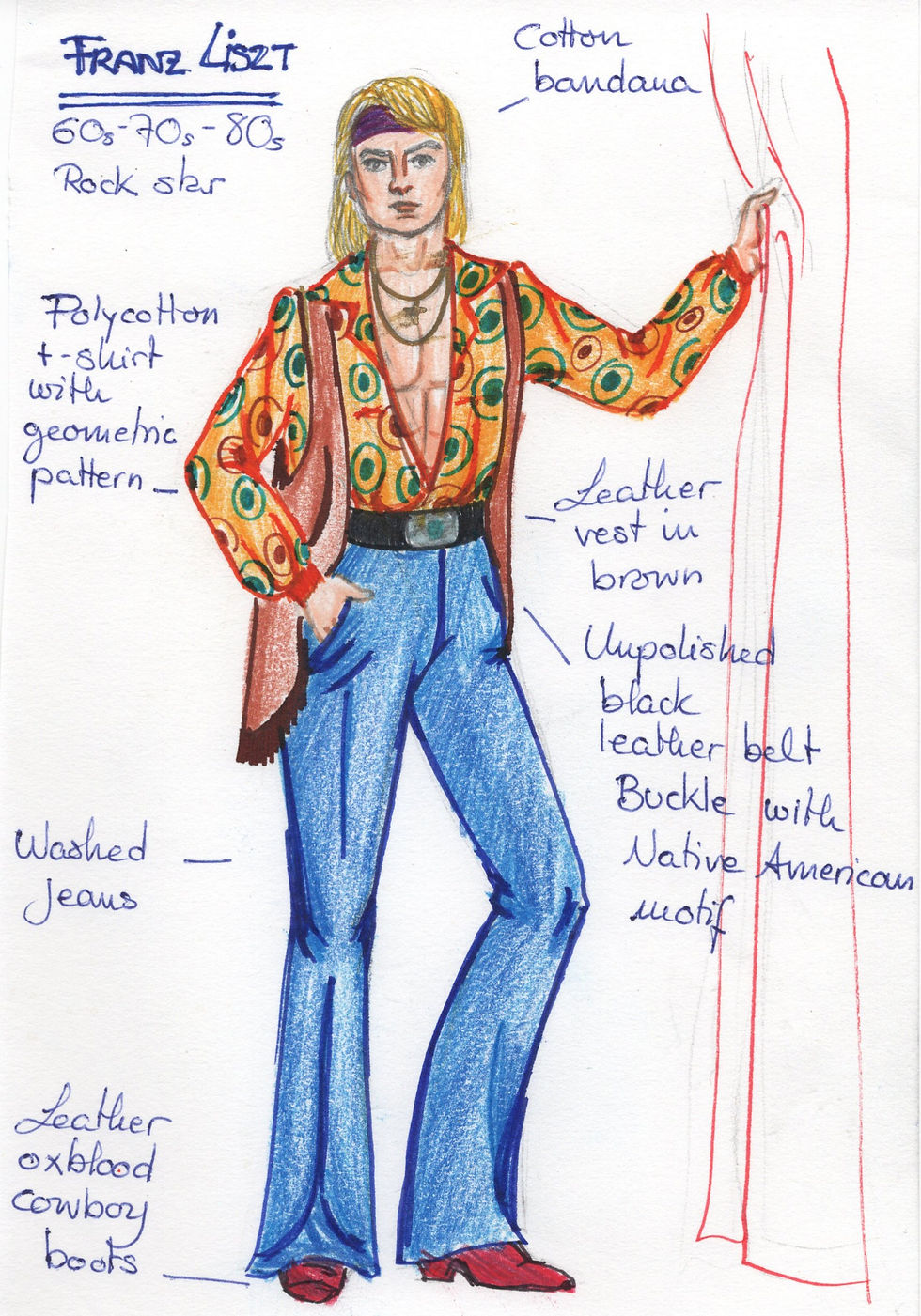
Enfant terrible of classical music. The passionate pianist who drove women and men to connect with their most intimate and unspoken desires. The one who did not care at all about conventions and rules, because his own passion drove him.
As the first, he could be catalogued as “rock star”, with followers that went crazy wild for him and his music. Where and when could find artists that broke conventions of their time and who possessed sex appeal, talent and passion for life?
For me the answer was clear: the second half of the XXth century. From Woodstock to Wembley and world tours. When presence and talent were more important than big screens, fireworks and auto tune.
His long hair stays. His sensuality and wild side are shown through fabrics, the open shirt, the washed jeans and the cowboy boots. His pose is controlled, but his mind is going light speed, ready to absorb life and create art.
You have David Bowie, Jim Morrison, Freddie Mercury…and Franz Liszt.
Vincent Van Gogh
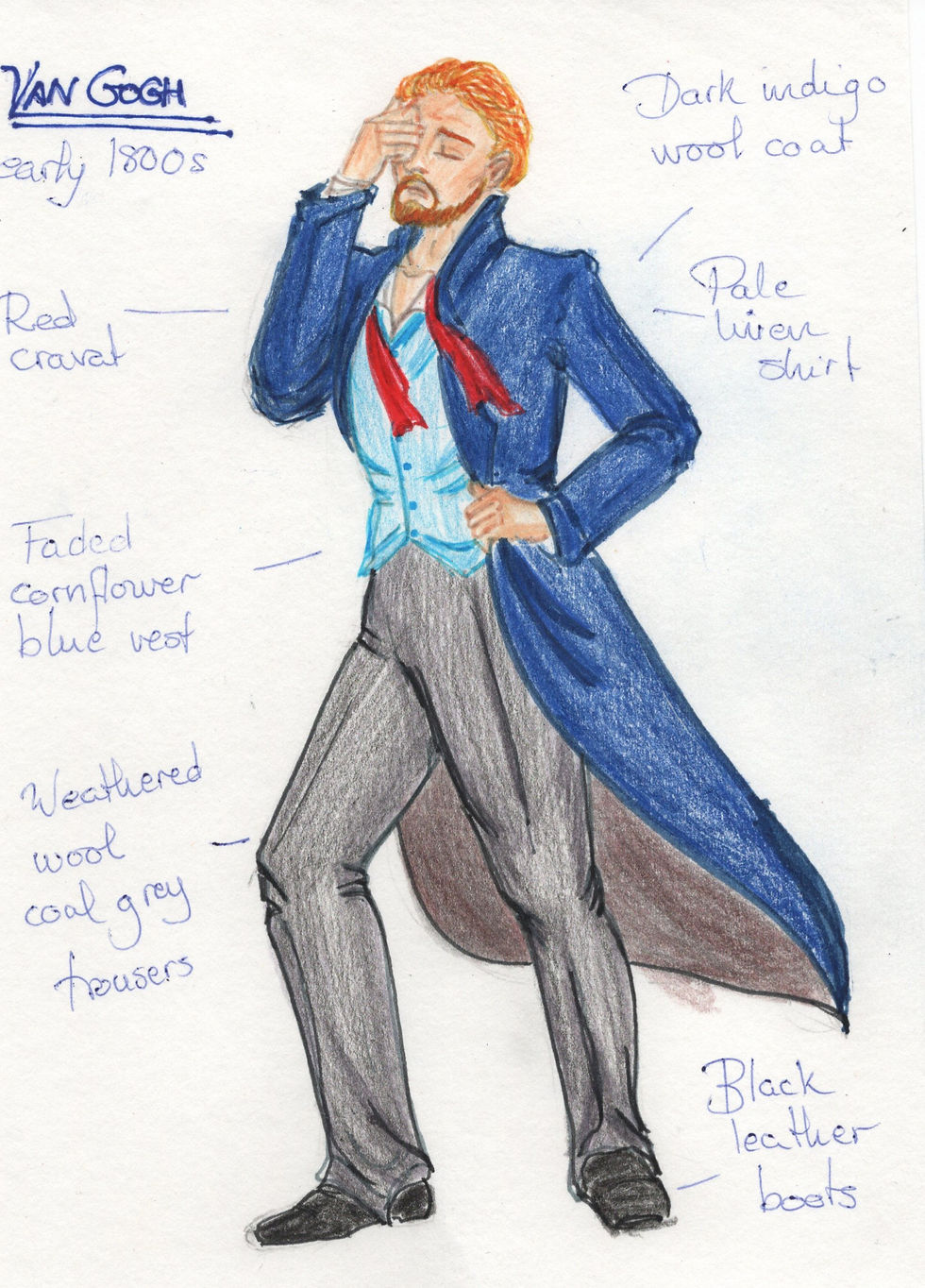
He represents the tortured soul of the artist. That’s what we all think if we stop and reflect about being an artist. Tormented. Lonely. Misunderstood.
Well, all this is true in this case. Very romanticized too. But nothing as starry eyed as we can think. It was more about suffering and pain
His inability to be understood - or better said, the inability of the world to understand and see him - brings his painful pose. The red in the cravat shows his passion and his interior pain. Wind against him, pushing him back. The dark colours show the spiralling of his mind. Nothing starched, ironed, composed in him. The open t-shirt shows the impossibility to be “contained”.
I don’t even like his paintings, if I am honest. But I feel I understand him. I do not connect with his brushtrokes or colours - but with the pain behind them. The ache to be seen, the torment of being misunderstood, the desperate push to translate what’s inside into something the world could grasp. That’s what speaks to me.
That’s why I brought him back to the Romantic era, because this is not about starry nights or sunflowers - it’s about a man spiralling through isolation, pressing meaning into a canvas as if it were breath.
If someone really represents that tortured aspect of the artist, the relentless need to be understood…it is him.


Comments